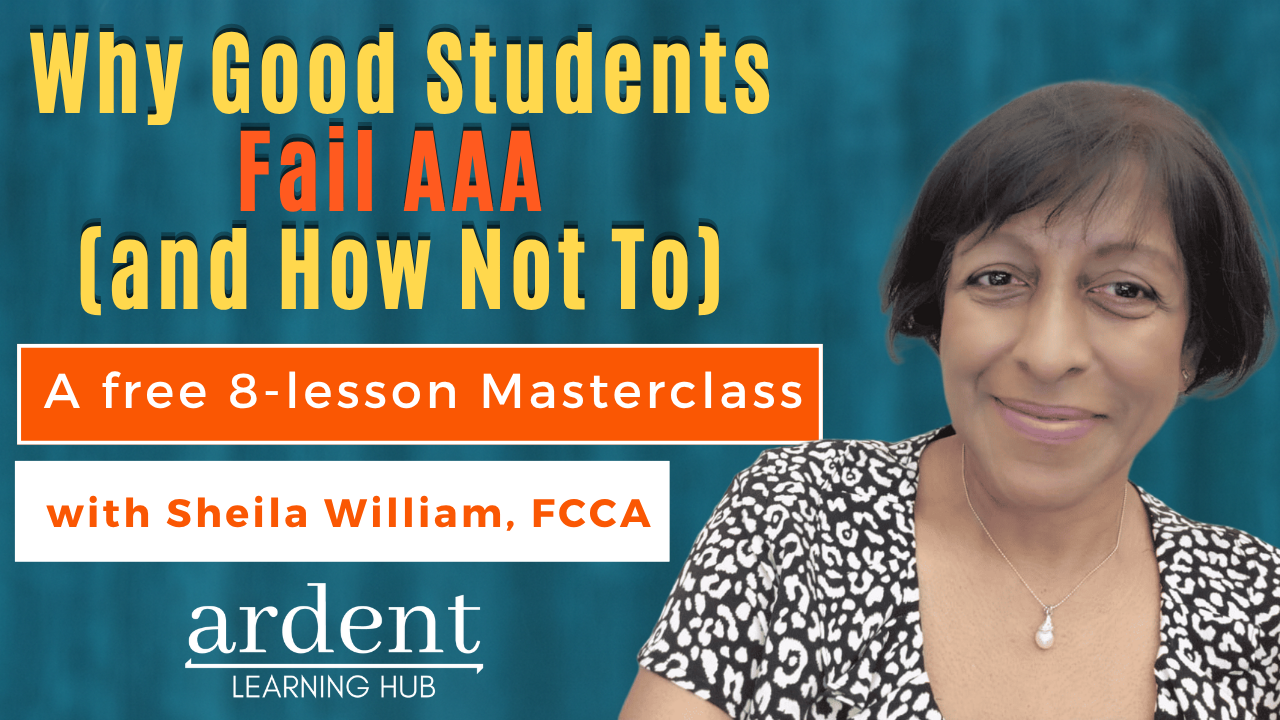
Why ACCA AAA Students Who Read and Watch Still Fail And What Actually Works
 Bosco
Bosco 
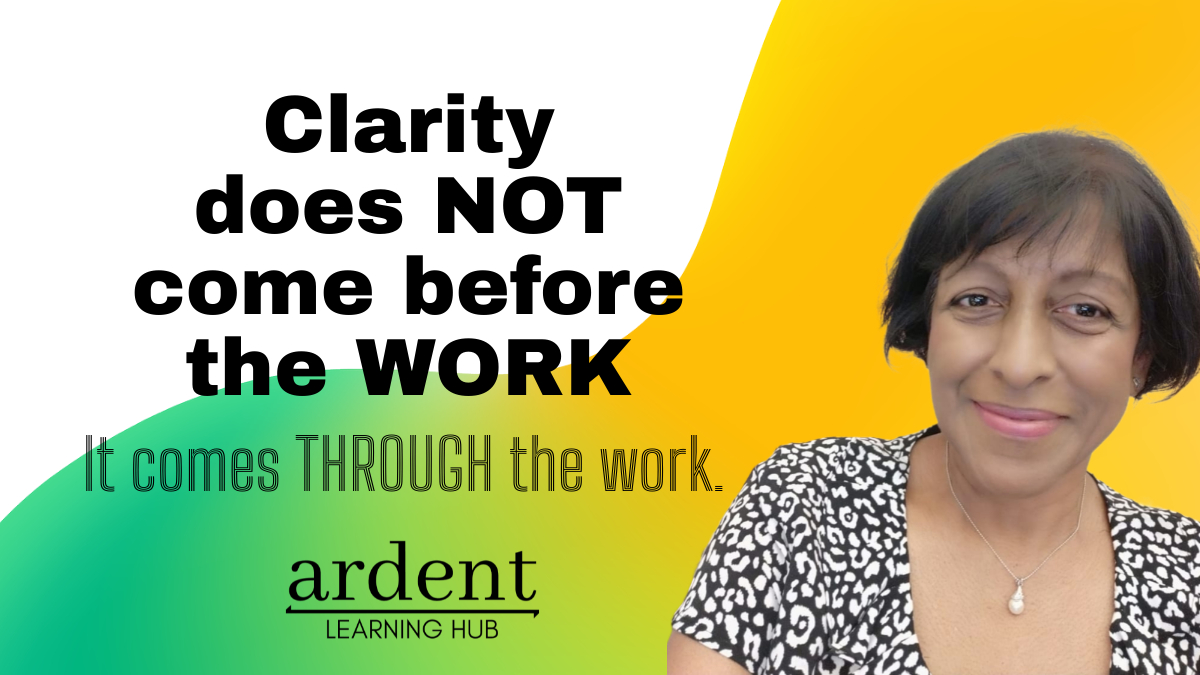
"Most AAA students read and watch but never truly start. Discover why doing is the only path to clarity and how to build real exam competence."
I want to share something I have observed closely over many years of watching Sheila William FCCA teach ACCA AAA students.
Most students who fail AAA are not lazy. They are not unintelligent. Many of them have worked genuinely hard, reading through their notes, watching lecture videos, revisiting their textbooks. They put in real hours. Real effort.
And then they sit the exam. And they fail.
The global pass rate for ACCA AAA tells the story in a single number. In December 2025, only 38% of students passed. The five most recent sittings have produced pass rates of 39%, 39%, 40%, 40%, and 38%. Fewer than four in ten students pass AAA each time it is sat and making it consistently the hardest paper in the entire ACCA qualification.
That is not a coincidence. And it is not simply because the paper is difficult.
It is because most students are preparing for the wrong exam.
What the Examiner Actually Says
Read that again. The examiner has been saying the same thing for years. And the pass rate has not moved.
This is the structural problem Sheila has been solving with her students for over two decades. And it begins with one fundamental misunderstanding about what studying for AAA actually means.
Reading and Watching Is Not Studying. Not Yet.
When a student reads their notes, they can tell themselves: I understand audit risk. When they watch a lecture video on going concern, they nod along and the logic makes sense. They feel like they are making progress. And in one sense, they are but they are building familiarity with the content.
But AAA is not a familiarity paper. It is an application paper.
The moment a student sits down with a scenario question — a real company, a real set of circumstances, real pressures and judgements to make and they have to perform their understanding. They have to take what they know about ISA 315 or ISA 570 and wrestle it into a specific context, identify what matters in that particular situation, and write an answer that demonstrates professional thinking.
If the understanding is not truly embedded, the question will tell them immediately. The question does not lie.
Clarity only comes after you start the work. You cannot fathom what you have not yet done.
The Recipe That Didn't Work
Let me share an analogy that Sheila uses with her students that I think captures this perfectly.
Imagine you find a recipe from a renowned chef. It is well-reviewed and credible. You read it carefully. You watch a video of someone cooking it step by step. You feel ready.
You go to your kitchen. You prepare the ingredients. You follow every instruction on the page.
You serve the dish to your family. And they take one bite and quietly put down their fork.
What went wrong? The recipe was correct. The chef was credible. You followed everything.
But here is what no recipe and no video, and no set of notes can teach you: the exact moment to adjust the heat. How the smell of the spice tells you it is ready. How thin to slice the ingredients. The feel of the dough. The subtle play of fire and timing that only reveals itself when you are standing at the stove, cooking.
These things only reveal themselves through doing.
AAA is exactly like this. You can read every standard. You can watch every lecture. But until you sit down with a scenario question and attempt an answer and get it wrong, and try again you are reading the recipe and calling it cooking.
Why Students Avoid Attempting Questions
The reason most students avoid attempting questions is not laziness. It is fear.
When you are reading your notes, you can maintain a comfortable belief: I know this material. The notes do not challenge that belief. The video does not challenge it either. You are safe.
But the moment you attempt a question, you have to find out the truth. And if the truth is that your understanding is shallower than you thought and that you know the facts but cannot apply them and that is a painful thing to discover.
So students avoid the question. They read a little more. They watch another video. They tell themselves they will attempt questions once they finish revising the whole syllabus.
And the exam arrives before they ever truly started.
This avoidance is the single most costly mistake an AAA student can make. Because the only thing that builds the competence the examiner is looking for is the ability to apply knowledge to scenarios with genuine professional judgment and this only happens with repeated practice with questions, with correction, and with trying again.
What Happens When Students Actually Do the Work
I have had the privilege of watching Sheila take students through her boot camp process, and the transformation is always the same.
A new student joins. They attempt their first assignment. Sheila marks it and sends it back.
"This is wrong. This is wrong. This is wrong. Do it again."
You can feel the resistance. The frustration. The student thinks: what? I have to do it again?
They do it a second time. She sends it back again. A third time. A fourth time.
By the fourth attempt, something has shifted. The repeated corrections have accumulated into genuine understanding. The student begins to see not just what the right answer is — but how to think toward it.
When the second assignment comes, Sheila only needs to send it back twice. By the third assignment, she does not need to send it back at all.
That is what doing does to a person. That is how competence is actually built.
The Resistance Is Normal. Start Anyway.
That resistance you feel when you think about attempting a question is not a sign that you are not ready. It is not a sign that you are not capable. It is simply what the beginning feels like for everyone.
Think about starting an exercise regime after a long period of inactivity. The first session is hard. Your body protests. Everything in you wants to stop. But you do not stop. And after a few weeks, something shifts. You become stronger. You begin to look forward to it. You begin to enjoy it.
The doing changed you. Not the intention to exercise. Not the plan to exercise. The doing itself.
AAA questions work exactly the same way. The first scenario you attempt will feel like a mountain. You will not know where to start. Your answer will be incomplete. Sheila will send it back.
But you will climb that mountain. And the next one will be smaller. And the one after that, smaller still.
What This Means for Your AAA Preparation
No matter which sitting you are preparing for, the time to start attempting questions is now. Not after you finish your notes. Not after one more lecture. Now.
-
1Read to understand, then immediately attempt. Do not finish an entire topic before attempting questions. Read a section, close the notes, and try a question. The question will tell you what you actually understood and what you only thought you understood.
-
2Embrace the wrong answers. Every incorrect answer is a gift. It tells you exactly where your thinking drifted and where you knew the fact but not the application. That feedback is more valuable than any additional reading.
-
3Do it under time pressure. AAA is a timed exam. Practising without time pressure builds a false confidence. From early in your preparation, attempt questions with the clock running.
-
4Seek structured feedback. There is a significant difference between attempting questions in isolation and having an experienced tutor identify the specific patterns in your errors. Sheila's method works because the correction is precise and specific to your gaps, not generic.
-
5Calibrate constantly. Regular question practice is how you stay aligned with what the examiner wants. It is how you know, before the exam, where you actually are.
A Law of Learning Itself
Clarity does not come before the work. It comes through the work. You cannot grasp what you have only observed. You cannot fathom what you have not yet done. The recipe cannot make you a cook. The notes cannot make you an auditor.
The examiner has been saying this for years. The pass rate reflects what happens when students ignore it.
You now know what to do differently.
Ready to Start Doing?
Sheila William FCCA has spent over two decades helping working professionals move from passive familiarity with AAA content to genuine, exam-ready application competence. There is a course designed for where you are right now.
Explore AAA Courses at Ardent Learning HubFree masterclass
Studied hard and still failed AAA?
In 8 short video lessons, Sheila William FCCA shows you how to study the way the AAA exam is actually marked. It's free, and you can watch at your own pace.
Watch the free masterclass → Not sure which course fits? Take the 2-minute course finder